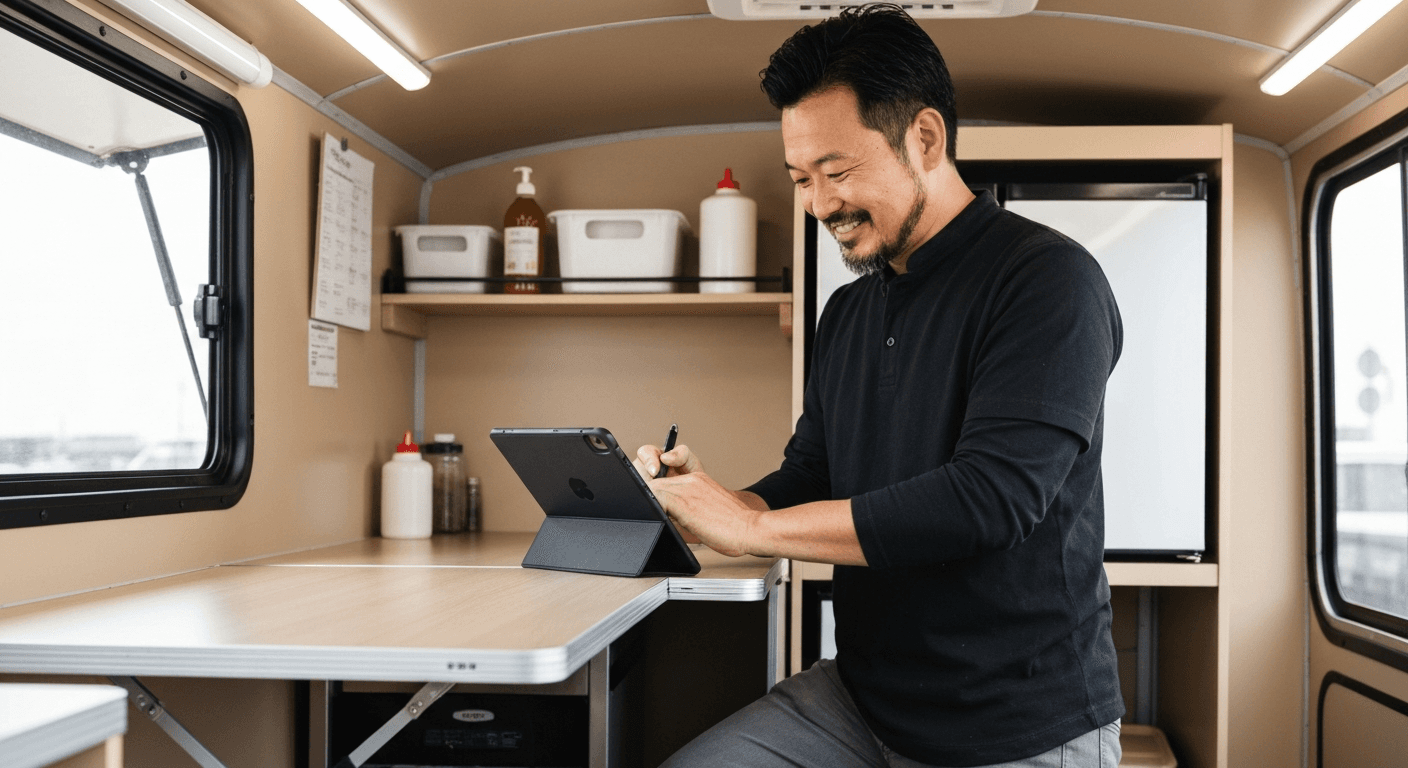
From Paper Notebook to Digital Dashboard
For a long time, running a food truck meant paper order books, cash payments, handwritten stock lists and accounts handed to an accountant once a year. This model worked — until margins tightened, costs rose and competition intensified.
Today, the food truckers making the fastest progress are those who have understood that data is an asset. Knowing exactly what you sell, when, where and at what cost allows for fast, informed decisions rather than navigating blind.
But digitalising your food truck does not mean revolutionising everything in a week. It is a gradual process, with clear priorities.
Step 1: Digitalise Payment Processing
This is the essential starting point. Without reliable sales data, no analysis is possible.
Why Adopt a Connected Payment Terminal
A terminal like SumUp, Square or iZettle serves two functions: taking payments from customers (card, contactless, Apple Pay, Google Pay) and recording each transaction with a timestamp, amount and payment method.
This raw data is the foundation for everything else. It will later allow you to analyse your sales by hour, by location, by day of the week.
In practice, more than 70% of customers today prefer to pay without cash. A food truck that only accepts cash loses sales, full stop.
What You Gain Immediately
- No more manual end-of-service cash reconciliation
- Full traceability of every transaction
- Automatic sales reports by day and by week
- Fewer change-giving errors
Step 2: Digitalise Inventory Management
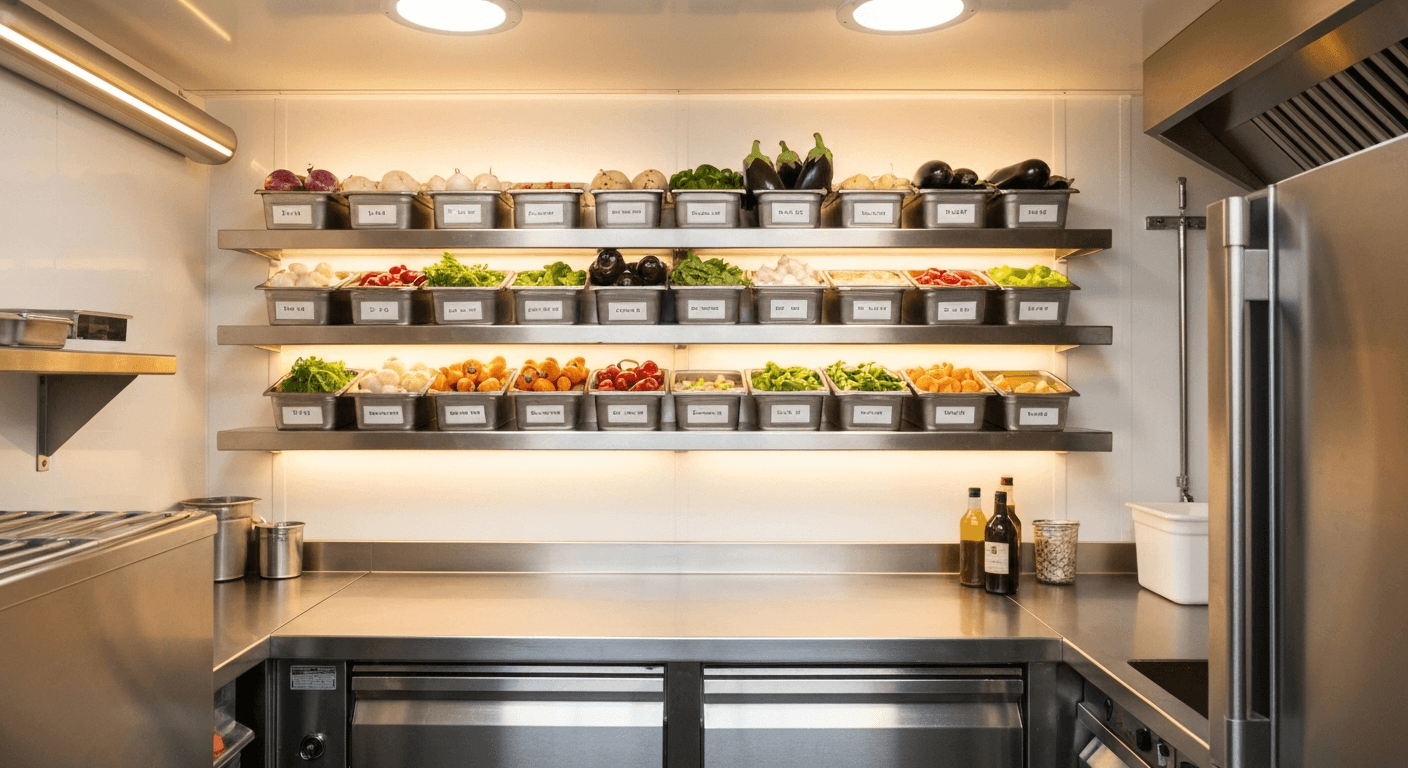
Once payment is connected, the next priority is stock. This is often where the biggest losses are hiding.
The Problem with "By Feel" Stock Management
Without precise tracking, you over-order or under-order. You throw away expired products. You run out of stock mid-service. These situations cost money — between 5 and 15% of monthly revenue depending on the food truck.
What an Inventory Management Tool Provides
A tool like FoodTracks allows you to:
- Scan purchase invoices to automatically record stock entries
- Track consumption by recipe and by service
- Receive alerts on products approaching their use-by date
- Automatically calculate your food cost per dish
Stock Forecasting: The Next Level
The real power of digital tools is anticipation. By analysing your sales history by location, weather and day of the week, a smart tool predicts the quantities you will need for each service.
Result: you prepare what you will sell, no more, no less. Unsold stock falls, waste decreases, and your cash flow breathes.
Step 3: Digitalise Accounting and Cash Flow
Accounting is often experienced as a chore. Digitalisation transforms it into a management tool.
From Cash Book to Real-Time Dashboard
With a connected till and a management tool, your sales data is already recorded. All that remains is to integrate it into a cash flow tracker to have a permanent clear view of:
- Your revenue for the day, week and month
- Your costs by category (purchases, fuel, fixed costs)
- Your available balance and your 30-day projection
Preparing Your Accounts for Your Accountant
Another underestimated benefit: the quality of data sent to your accountant. With automatic sales exports, scanned purchase invoices and till statements, you significantly reduce your accounting preparation time — and potentially your fees.
Step 4: Digitalise Customer Relations and Online Presence
Digitalisation does not stop inside the truck. It also affects how you communicate with your customers.
Managing Social Media Methodically
An active presence on Instagram, Facebook or TikTok can multiply your regular customers. But posting without a strategy consumes time for little result. Scheduling tools (Later, Buffer) allow you to prepare a week of content in one hour.
For more on this, see our guide on the food truck social media strategy.
Collecting and Displaying Customer Reviews
Google reviews are the first instinct of new customers looking for a food truck. Making review collection easy (QR code on the counter, thank-you message after payment) improves your online reputation without daily effort.
Building Loyalty via Email or SMS
A customer list with email addresses or phone numbers allows you to send a monthly newsletter or a service alert. Simple, low-cost, and effective for maintaining a steady flow of regular customers. Our guide on food truck customer loyalty via email and SMS gives you all the steps.
Step 5: Centralise All Data in a Single Tool
Digitalisation works best when tools communicate with each other. Having sales data in SumUp, stock in an Excel spreadsheet and cash flow in a separate notebook is better than nothing — but it is still fragmented.
The Advantage of a Central Platform
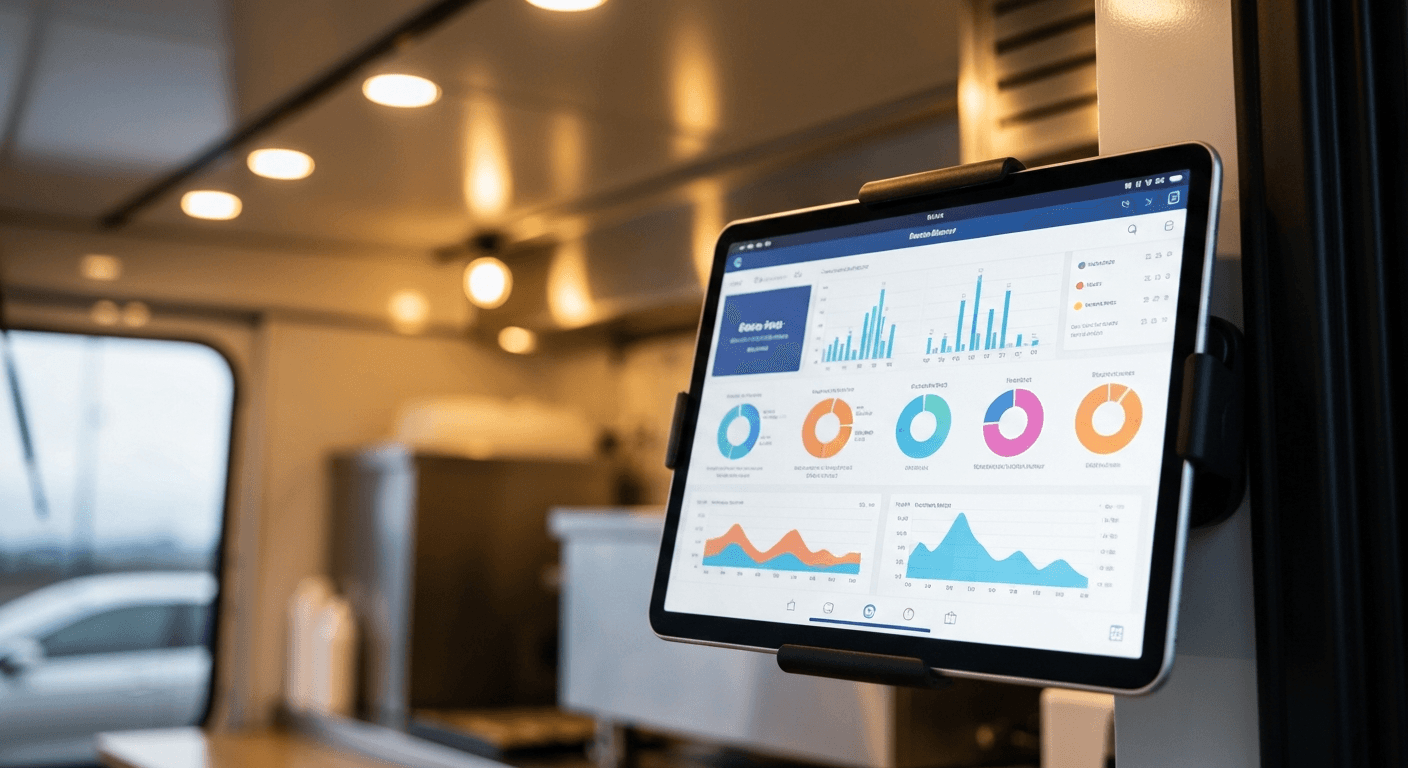
A tool like FoodTracks was specifically designed for food truckers with this philosophy: centralise everything. By connecting your SumUp till to FoodTracks, you get a single dashboard that brings together:
- Real-time sales by location and by dish
- Stock tracking and expiry alerts
- Automatic margin and food cost calculation
- Sales forecasts for each upcoming service
- Cash flow tracking and projections
Mistakes to Avoid When Digitalising
Trying to Change Everything at Once
The temptation to adopt 10 tools simultaneously is strong. It is the best way to get discouraged and return to the paper notebook. Move step by step, consolidating each building block before adding a new one.
Choosing Tools Not Designed for Mobile Catering
A general-purpose till software or an Excel spreadsheet does not understand the specifics of a food truck: location-based management, variable demand, on-board storage constraints. Prioritise tools built for your trade.
Neglecting Training
Even the best tool is useless if not used correctly. Take the time to train yourself, read the documentation, and if you have employees, train them too.
Measuring the Return on Investment of Digitalisation
Digitalisation is an investment. Like any investment, it can be measured.
Here are the indicators to track before and after going digital:
- Weekly admin time: accounting, inventory counts, sales reports
- Waste rate: value of unsold items / revenue
- Monthly net margin: what remains after all costs
- Number of till errors per week
Conclusion
Digitalising a food truck is not reserved for large chains or tech-savvy profiles. It is an accessible, gradual and profitable approach — provided you start with the right building blocks.
Connected payment, real-time inventory management, cash flow tracking and data centralisation: these four pillars transform an artisan food truck into a data-driven business. And this move to digital is what makes the difference between food truckers who stagnate and those who progress every month.
Also read: Food Truck KPI Dashboard · Food Truck Cash Flow Management · Calculate the Cost Price of a Food Truck Recipe
Frequently Asked Questions
- Where should I start to digitalise my food truck?
- The first step is to digitalise payment processing by adopting a connected till (SumUp, Square, iZettle). This immediately gives you usable sales data. Then move on to inventory management, then accounting. The key is to progress step by step rather than changing everything at once, which can disrupt your daily operations.
- What is the average cost of digitalising a food truck?
- The cost varies depending on the level of equipment chosen. A SumUp Air payment terminal costs around €39 to purchase, with a 1.69% commission per transaction. A management tool like FoodTracks starts from €29/month. In total, a food truck can be fully digitalised for under €100/month — an investment easily offset by savings on waste and admin time.
- Is digitalisation useful for a solo food truck operator?
- Absolutely, and even more so than for a team. As a solo food truck operator, every minute counts. Digital tools automate repetitive tasks (stock tracking, cash flow monitoring, sales reports) and free you to focus on what matters: the quality of your food and the customer experience. A solo food trucker can save 6 to 8 hours per week through good digitalisation.
- Do digital tools work without an internet connection?
- Most modern payment terminals (SumUp, Square) work in offline mode and synchronise transactions as soon as the connection is restored. For management software, a connection is generally needed to access cloud data, though some offer limited offline modes. In practice, a dedicated 4G/5G plan for the truck is sufficient to ensure service continuity in almost all situations.
- How does digitalisation improve a food truck's profitability?
- Digitalisation improves profitability on several fronts: reduced food waste thanks to stock tracking and sales forecasting, savings on admin time, better visibility on per-dish margins, and faster decision-making based on real data. Food trucks that go digital see an average improvement of 10 to 20% in net margin within the first six months.