Why Pricing Is the Key to Profitability
Many food truckers set prices by gut feeling or by copying competitors. The result: margins too thin to cover real costs. A well-priced menu is the difference between a food truck that survives and one that thrives.
Food Cost: Your Starting Point
Food cost should ideally represent 25 to 35% of the selling price. To calculate it:
- List all ingredients for each recipe
- Weigh exact quantities per portion
- Calculate the unit cost of each ingredient
- Add up to get the total food cost
Hidden Costs You Must Include
Beyond ingredients, factor in:
- Packaging and supplies (containers, napkins, sauces): €0.30 to €0.80 per sale
- Location fees: pitch rental, market fees, festival commission
- Fuel and vehicle maintenance
- Insurance and social charges
- Equipment depreciation
The Multiplier Method
The simplest approach: apply a multiplier of 3 to 4 on your food cost.
| Food Cost | x3 | x3.5 | x4 | |---|---|---|---| | €2.00 | €6.00 | €7.00 | €8.00 | | €3.00 | €9.00 | €10.50 | €12.00 | | €4.00 | €12.00 | €14.00 | €16.00 |
Structure Your Menu to Sell More
An effective food truck menu follows these rules:
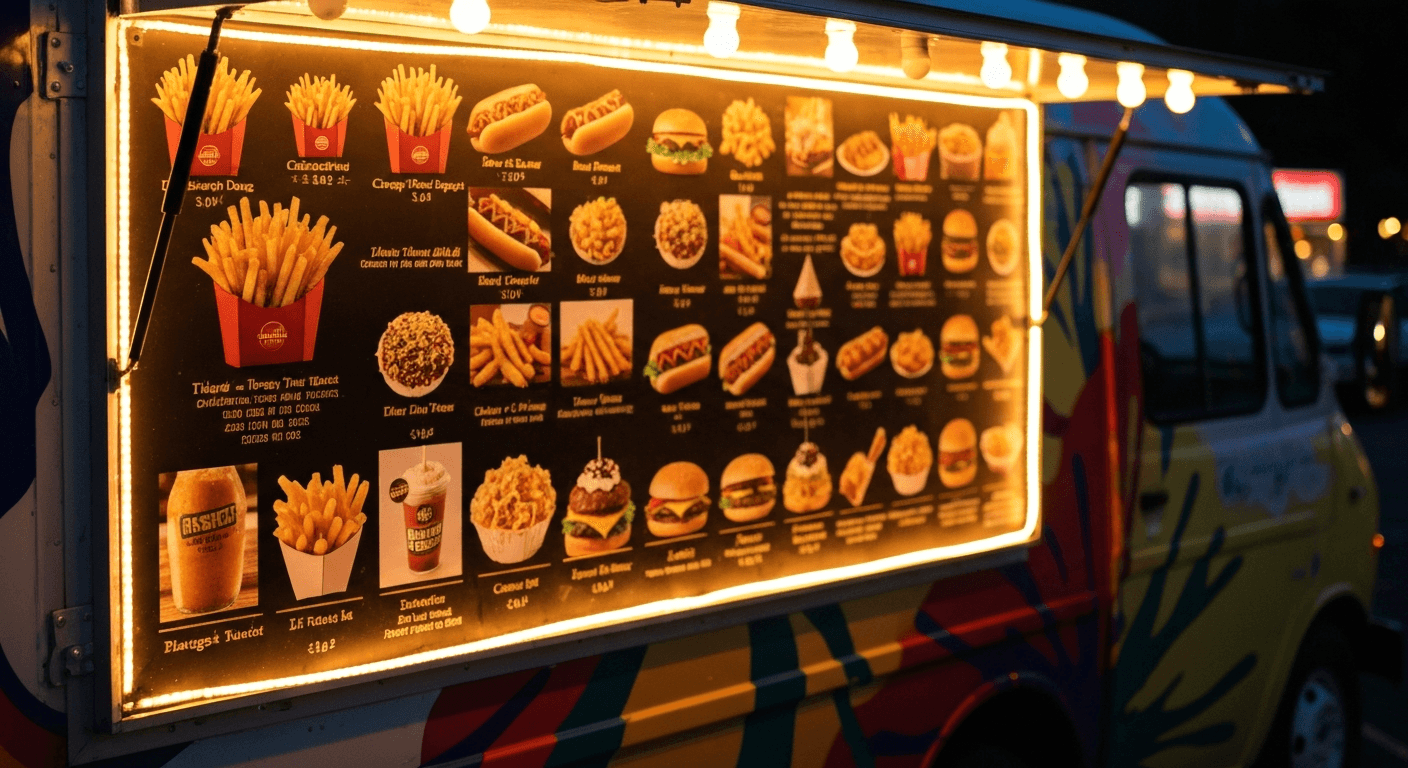
- 5 to 8 items maximum — too much choice overwhelms customers and slows service
- One star product with high margins featured prominently
- Combo deals (main + drink + dessert) that increase average spend by 20-40%
- An entry-level price to attract, and premium options to upsell
Pricing Psychology
- Use round prices (€8, €10, €12) — makes change easier in food trucks
- Place the most expensive item first on the menu — everything after seems more affordable
- Never display the € symbol on the menu (studies show it reduces spending)
Adapt Prices to Context
Your prices can vary based on:
- Location: city center vs industrial zone vs festival
- Event type: weddings/corporate = +20-30% justified by premium service
- Season: soups in winter, salads in summer, adjust portions and prices
How FoodTracks Helps
With FoodTracks, you can:
- Scan supplier invoices to automatically calculate food costs
- Track margins in real-time per product via SumUp integration
- Compare profitability across dishes and identify what needs adjusting
- Predict demand by location to adapt quantities and reduce waste
Frequently Asked Questions
- What multiplier should I use for food truck pricing?
- A multiplier of 3 to 4 on food cost is standard for food trucks. If your ingredients cost €3, sell between €9 and €12 depending on location and positioning.
- How many items should a food truck menu have?
- Between 5 and 8 items maximum. A short menu speeds up service, reduces waste, and simplifies inventory. Add combo deals to increase average spend.