Why a Loyalty Program Is Essential for Your Food Truck in 2026
In an increasingly competitive street food sector, acquiring a new customer costs 5 to 7 times more than retaining an existing one. Yet most food truckers spend the bulk of their marketing budget on acquisition (social media, flyers, market presence) and overlook retention.
A well-designed loyalty program lets you:
- Increase visit frequency among your regular customers
- Grow average basket size through tiered rewards
- Build an emotional connection with your food truck brand
- Collect customer data to better run your business
Types of Loyalty Programs Suited to Food Trucks
1. The Stamped Paper Loyalty Card
The classic: "Buy 10 coffees, get 1 free." Simple, zero implementation cost, but with real limitations:
- Fraud risk (fake stamps or lost cards)
- No customer data collected
- No way to communicate with the customer between visits
2. Mobile Loyalty Apps
Tools like Stamp Me, Yollty, Fidly, or Square Loyalty let you create a digital loyalty card in minutes that customers add to their wallet (Apple Wallet, Google Pay).
Concrete advantages:
- Automatic push notifications: "You have 8 points — just 2 more for your reward!"
- Real-time visit tracking from your dashboard
- Customer segmentation (frequent, occasional, inactive)
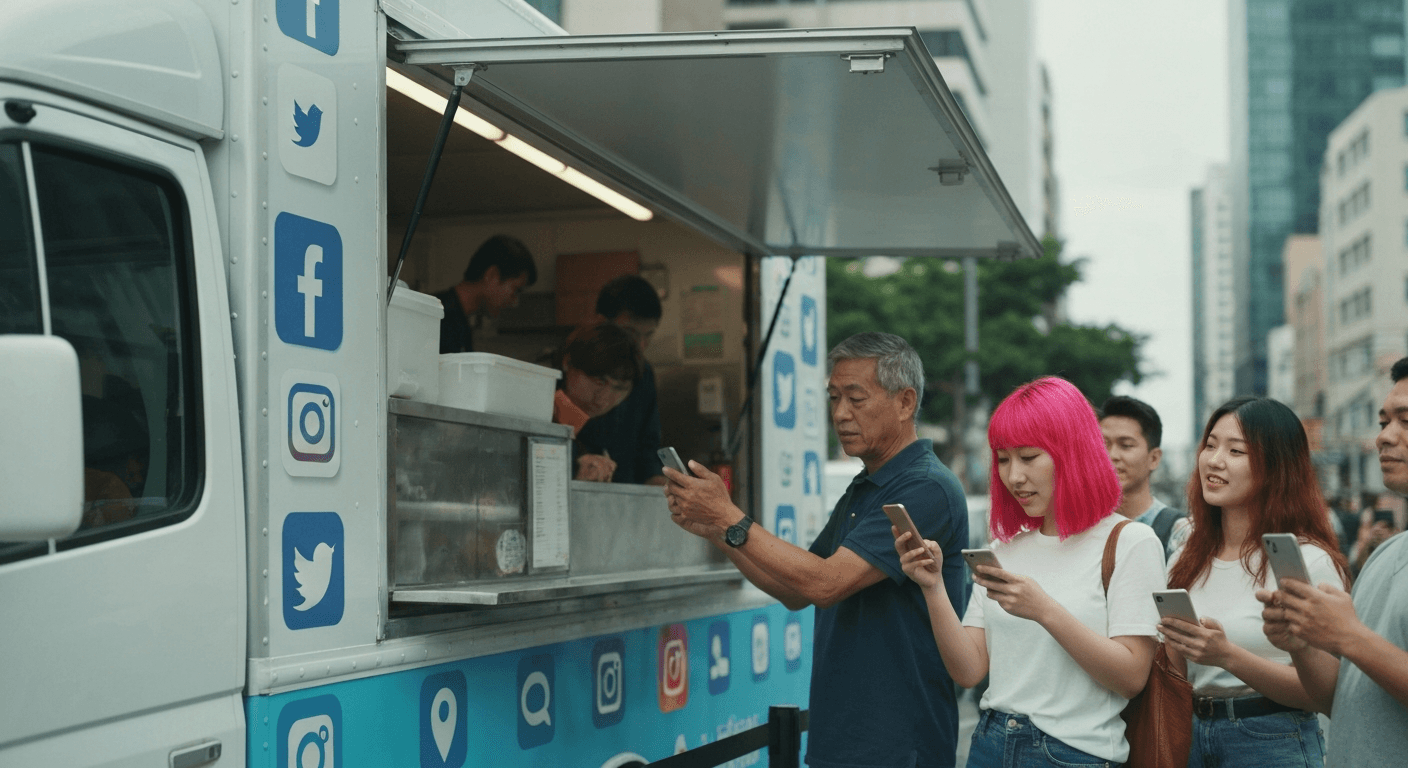
- Zero friction for the customer: scan a QR code at checkout
3. A Custom Points Program
More sophisticated: every euro spent earns points. Customers accumulate them to unlock increasingly valuable rewards. This system encourages higher average basket sizes because customers sometimes order a little more to reach the next tier.
4. The Subscription VIP Program
A fixed monthly subscription (e.g., €15/month) offering exclusive perks: a free coffee every week, a permanent 10% discount, order priority. This model secures recurring revenue — especially valuable for independent food truckers.
How to Structure Rewards to Maximise Profitability
Choose High-Perceived-Value, Low-Real-Cost Rewards
The classic mistake is to offer percentage discounts (−10%, −20%) that directly erode your gross margin. Instead, offer:
- A signature dish for free: food cost €2–3, but perceived value €8–12
- Queue priority: zero cost, highly appreciated at peak hours
- Exclusive access to a daily special reserved for loyalty members
- A free dessert or drink with every order at the higher tier
Set the Optimal Redemption Threshold
The threshold should be motivating enough to encourage return visits, without being discouraging. Rule of thumb:
- Average visit frequency: if it's twice a month, target a reward after 8 to 10 visits (4–5 months)
- Average basket: if your average ticket is €12, a reward at 100 points (1 point/€) unlocked after €80 in cumulative spend is reasonable
The 80/20 Rule Applied to Loyalty
In most food trucks, 20% of customers account for 50 to 60% of repeat transactions. Identify these VIPs and create a special reward tier just for them: sneak peeks at a new menu, invitations to a private tasting event, custom order options.
Launching Your Loyalty Program: Practical Steps
Step 1: Choose and Configure Your Tool
For an independent food truck, here's a 2026 shortlist:
- Stamp Me: free up to 200 customers, simple interface, built-in QR code
- Yollty: built for mobile catering, multi-location management
- Square Loyalty: if you already use Square for payments, native integration
- Fidly: French solution, GDPR-native, Apple/Google Wallet built in
Step 2: Train Yourself (and Your Team) on the Process
The program only works if every transaction is recorded. Set a routine:
- The customer presents their QR code or phone number
- You scan or enter the amount
- Points are credited automatically
- The customer receives a notification
Step 3: Communicate the Launch
- Signage on the truck: "Join our loyalty program — 1 free coffee when you sign up"
- Social media: announcement with countdown
- First customers: offer welcome points (equivalent to 2–3 visits) to accelerate adoption
Step 4: Re-engage Inactive Customers
A customer who hasn't returned in 30 days is at risk of disengaging. Send an automatic notification: "It's been a while! Your 6 points are waiting — just 4 more for your free burger." This type of re-engagement can recover 15 to 25% of dormant customers.
Loyalty and Operational Management: The Winning Combo with FoodTracks
A loyalty program generates valuable data that is often underutilised: your regulars' buying behaviour. By combining this data with FoodTracks, you can:
- Anticipate demand: if your 50 VIP customers mostly order a special burger every Friday, you know exactly how many to prepare
- Align supplier orders with the favourite dishes of your loyal customers, reducing waste on less popular items
- Track revenue impact: FoodTracks shows you the correlation between your services and income, letting you measure the real ROI of your loyalty program
Mistakes to Avoid at All Costs
Making the Program Too Complex
If customers have to remember 3 types of points, 5 levels, and different expiry rules, they'll give up. Simplicity is your best retention tool.
Forgetting to Communicate Progress
A customer who doesn't know how many points they have won't be motivated. Automate notifications with each transaction and before each reward threshold.
Offering Rewards Without Calculating Their Margin Impact
Before promising a free dish, check your food cost. With FoodTracks, you can precisely calculate the cost price of each recipe to ensure the reward stays profitable.
Launching a Program and Never Evaluating It
Set monthly KPIs to track:
- Sign-up rate: % of customers who joined the program
- Activation rate: % who earned at least one reward
- Visit frequency before/after joining
- Average basket members vs non-members
Conclusion: Loyalty Is a Long-Term Investment
A food truck loyalty program isn't an expense — it's a structural investment in customer lifetime value (LTV). A regular customer who visits your food truck three times a week instead of once represents three times the revenue — with no additional acquisition cost.
In 2026, with digital tools accessible from €0/month and the ability to integrate with your operational management via FoodTracks, there's no excuse not to take the plunge. Start simple: a QR code, a clear reward, and regular communication. The results will follow.
Frequently Asked Questions
- Which loyalty program should I choose for a food truck on a tight budget?
- For a minimal budget, Stamp Me offers a free version for up to 200 loyalty customers with a built-in QR code. If you already use Square as your payment terminal, Square Loyalty is a very convenient all-in-one option. The key is to start simply: one clear reward, one tool that's easy to use daily.
- How many points or stamps should I require before offering a reward?
- The ideal threshold depends on your average visit frequency. If your customers come about twice a month, aim for a reward achievable in 4 to 5 months (8 to 10 visits). If they visit weekly, 6 to 8 visits is enough. The goal: make the customer feel the reward is within reach, without waiting indefinitely.
- Does a loyalty program hurt my margins?
- Not if rewards are well chosen. Avoid percentage discounts (−10%, −15%) that directly reduce your margin. Instead, opt for a free dish or drink whose actual food cost is low (€2–4) but whose perceived value is high (€8–12). Calculate your cost price with FoodTracks before setting your rewards.
- Can a loyalty program be combined with food truck inventory management?
- Yes, and it's even recommended. By knowing which dishes your loyal customers order most often, you can anticipate your stock needs, reduce waste, and better calibrate your supplier orders. FoodTracks centralises your sales and inventory data, making it easy to cross-reference purchasing behaviour and stock levels.
- How do I re-engage customers who haven't used their loyalty card in a long time?
- Send an automatic notification after 30 days of inactivity, reminding them of their points balance and encouraging them to return with a time-limited bonus (double points this weekend, for example). Tools like Stamp Me or Yollty let you configure these re-engagement campaigns automatically. This type of campaign can recover 15 to 25% of dormant customers.