Do You Really Need to Hire for Your Food Truck?
Hiring is often seen as a difficult milestone for a solo food truck operator. Fear of employment costs, administrative constraints and dependency holds back many operators who are already working at the limit of their capacity.
Yet the right hire at the right time can transform your business: more services open, less accumulated fatigue, and revenue growth that's hard to achieve alone.
This guide gives you everything you need to decide whether you're ready to hire, what profile to look for, which contract to use — and how to measure whether it's profitable.
The Signs That It's Time to Hire
Before launching into a recruitment process, check that you tick at least three of these signals:
- You are turning customers away during rushes due to lack of capacity
- You are regularly working more than 55-60 hours per week
- You cannot open certain services (markets, festivals) due to lack of manpower
- Your revenue is stagnating despite growing demand
- You have reached €4,000 to €5,000/month in turnover
What Profile to Hire First?
The first hire in a food truck typically falls into one of two profiles:
The Versatile Assistant (Junior Profile)
This is the most common profile for a first hire. Their role: to support you during service (taking orders, assembly, checkout, cleaning), allowing you to be faster and to open more services.
Sought profile: motivated, comfortable with customer contact, available on weekdays and weekends, no mandatory catering experience. Experience can be built quickly with you.
Advantage: lower cost (minimum wage), easier recruitment, no need for a chef profile if you handle production yourself.
The Kitchen Assistant / Prep Cook (Intermediate Profile)
If your bottleneck is production (you're alone on the stoves and can't keep up with orders), a kitchen assistant or prep cook takes the pressure off in the kitchen.
Sought profile: culinary diploma or fast-food experience, ability to work in a confined space, autonomy on basic preparations.
Advantage: frees your bandwidth to manage customers, improves quality and consistency of dishes.
Contracts Suited to the Food Truck
French employment law offers several formulas well adapted to food truck operations:
The Casual Contract (CDDU)
The Contrat à Durée Déterminée d'Usage (CDDU) is the most flexible formula to start with. You employ someone for a specific service, with no commitment to regularity. It is possible to employ the same casual worker recurrently.
Advantages: total flexibility, adaptation to your variable schedule, ideal for testing before committing further.
Disadvantages: no guaranteed loyalty, a 10% precarity indemnity to be paid at the end of each contract.
Part-Time Permanent Contract
For a regular collaborator, a part-time permanent contract (generally 20 to 30 hours per week) is the formula that best encourages loyalty. You define the typical days and hours, with the possibility of additional hours.
Advantages: stability for both parties, loyalty, no precarity indemnity.
Disadvantages: stronger commitment, cannot choose not to call on the person without justification.
The Seasonal Fixed-Term Contract
If your business is highly seasonal (summer festivals, Christmas markets), the seasonal fixed-term contract is tailor-made for you: it allows you to employ someone for a defined season, from 1 to 8 months.
Advantages: duration adapted to your seasonality, no commitment outside the season.
Disadvantages: renewal to manage each season, end-of-contract indemnity if not renewed.
The Real Cost of a Food Truck Employee
This is the question that holds back most food truck operators. Here are the real figures for 2026:
For a Casual Worker (CDDU) at 8 Hours per Service
- Gross salary: 8h × €11.88 = €95.04
- Employer contributions (~45%): ~€42.77
- Precarity indemnity (10%): €9.50
- Total cost: ~€147 for 8 hours of work, i.e. ~€18.40/hour all-in
For a 25-Hour/Week Part-Time Permanent Contract
- Monthly gross salary: ~€1,286
- Employer contributions (~45%): ~€579
- Total employer cost: ~€1,865/month
Where and How to Recruit?
The Channels That Work for Food Trucks
- Local social networks: Facebook groups for your city, your Instagram account. An authentic post about "looking for a casual worker to help me at markets" often generates good organic applications.
- Hotel schools and culinary programmes: students finishing their training are looking for hands-on experience. Contact establishments in your area directly.
- Other food truckers and market operators: word of mouth in the food truck community is very effective. A profile recommended by a peer starts with a head start.
- France Travail (the public employment service): effective for permanent and fixed-term contracts, less so for casual work.
- Specialist platforms: Brigad or Combo to find casual hospitality workers quickly.
Writing a Job Posting That Attracts the Right Profiles
A good job posting for a food truck position should be direct and honest about the conditions: irregular hours, prolonged standing, confined workspace, intense rushes. Candidates who respond despite these constraints are generally the most suitable.
Include in your posting:
- The type of cuisine and the atmosphere of the food truck
- Typical hours and days
- The type of contract on offer
- What you are looking for (friendliness, reactivity, customer focus)
- What you offer (atmosphere, learning opportunities, remuneration)
Successfully Integrating Your First Employee
The first month is critical. Here are best practices:
Train to Your Standards, Not Generic Standards
Your way of preparing dishes, your way of welcoming customers, your way of managing the rush — these are unique to your concept. Take the time to explain and demonstrate rather than assuming the person "knows" because they have experience.
Give Rapid Feedback
In a food truck, problems need to be corrected immediately. A customer poorly greeted, a portion not respected — flag it directly and positively after the service. No unspoken issues.
Involve Them in Your Data
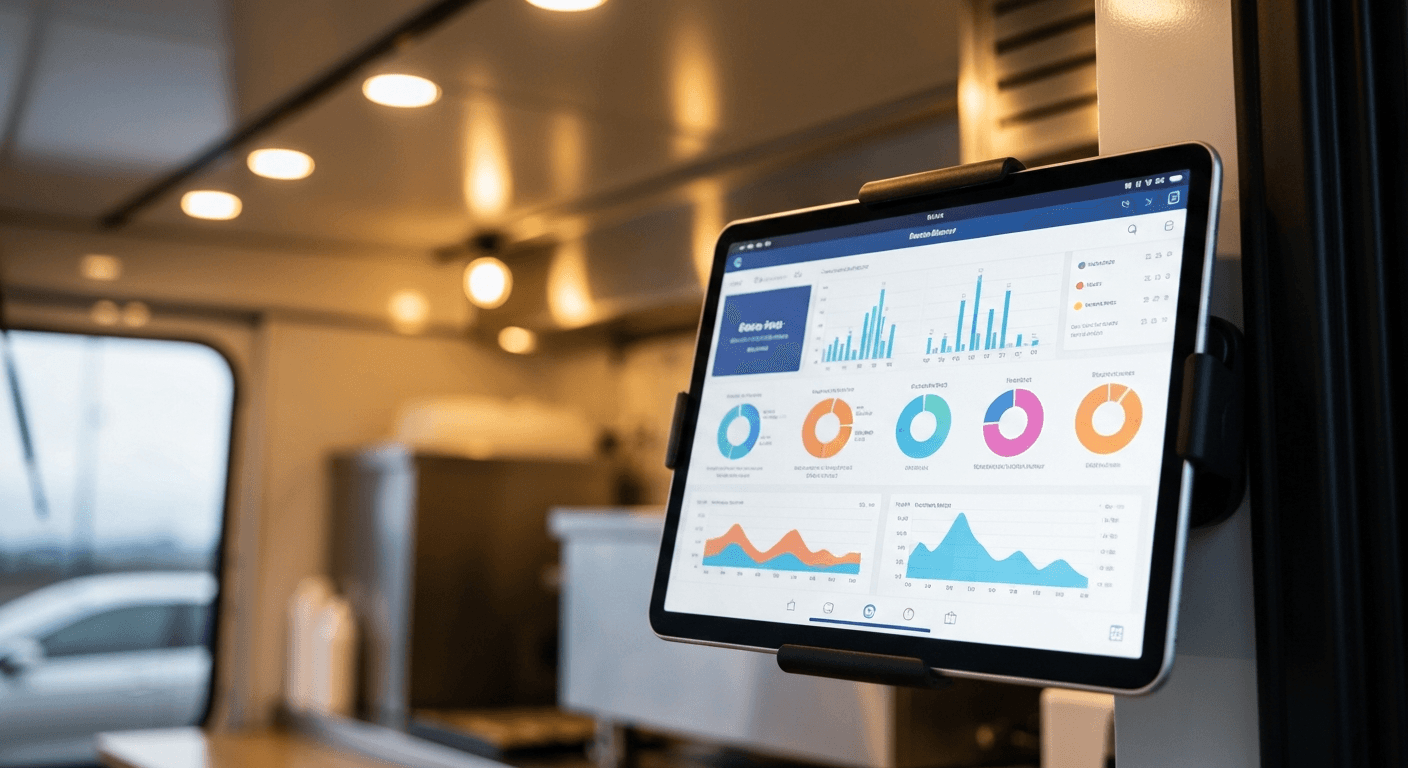
Share your service results with your employee: the day's revenue, the number of covers, customer feedback. An employee who understands the profitability stakes is naturally more engaged. FoodTracks lets you visualise this data in real time via the KPI dashboard to manage performance together.
Measuring the Profitability of the Hire
A hire is a business decision — it must be measured. Before hiring, note:
- Your average revenue per service
- Your number of services per week
- Your weekly working time
- Revenue per service (has it increased thanks to faster service?)
- Number of services (have you been able to open new ones?)
- Your net margin after employee cost
Conclusion
Hiring for your food truck is not a decision to take lightly, but it's not an insurmountable milestone either. The right profile, the right contract and a careful integration can transform your business by allowing you to cross a growth threshold that's hard to reach alone.
The secret: prepare your recruitment as seriously as you prepare your recipes. Define the role, the hours, the budget, and measure the impact on your profitability from the very first month.
Try FoodTracks for free to manage your profitability before, during and after your first hire.
Frequently Asked Questions
- When should I hire staff for my food truck?
- The right time to hire is generally when you reach €4,000 to €5,000/month in revenue and you are losing sales due to lack of capacity, or when you are spending more than 60 hours per week on the business. A well-chosen first employee can increase your revenue by 20 to 40% by allowing you to open more services or be more efficient during the rush.
- What type of contract should I use for a food truck employee?
- For starters, the casual contract (CDDU — fixed-term contract for customary use) is the most suitable: it allows you to employ someone on a one-off basis, service by service, without long-term commitment. For a regular profile, a part-time permanent contract (20-30 hours/week) offers more stability and encourages loyalty. The seasonal fixed-term contract is ideal for food truck operators with strong seasonality (summer markets, festivals).
- What is the real cost of a food truck employee?
- For an employee at minimum wage (€11.88/h gross in 2026), the total cost to the employer is approximately 1.45 times the gross salary. For 25 hours/week part-time, this represents approximately €1,900 to €2,000/month all-in (net salary + employer contributions). Additional costs may include end-of-contract indemnities (10% for a fixed-term contract), company health insurance and any transport costs.
- Where can I find candidates to work in a food truck?
- The best sources to recruit a food truck employee are: local social networks (Facebook groups for your city, Instagram), hotel schools and culinary vocational programmes in your area, word of mouth among other food truckers and market operators, France Travail (the public employment service) with a well-written listing, and specialist hospitality platforms like Combo or Brigad for casual staff.
- How do I measure whether my hire is profitable?
- To measure the profitability of a hire, compare your revenue per service before and after hiring, factoring in the total cost of the employee into your expenses. With FoodTracks, you can track revenue per service and calculate your net margin taking into account staff costs. A hire is profitable if the additional revenue generated (or the time freed up to open additional services) exceeds the cost of the employee.