Why Your Menu Is Your Most Powerful Profitability Lever
In a food truck, everything starts with the menu. Sourcing, inventory management, service speed, food waste, average ticket size -- every euro of margin begins and ends with a menu decision. A poorly built menu can reduce your profitability by 20 to 35%. A well-built one, on the other hand, can be your best salesperson.
This guide gives you a concrete method to build or rework your menu starting from numbers, not intuitions.
The Golden Rule: Less Is More
The classic beginner food trucker mistake is offering too many dishes. The logic seems sound ("more choice = more satisfied customers"), but in practice the opposite is true.
An overly long menu leads to:
- More complex inventory with more waste
- Longer preparation times that slow service
- Difficulty maintaining quality across all dishes
- Customers lost in the choice who end up ordering "anything"
Step 1: Identify Your Stars and Your Dead Weight
Before reworking your menu, analyse what you actually sell. Classify each dish on two criteria:
- Its popularity (sales volume)
- Its margin (selling price minus ingredient cost)
| | High margin | Low margin | |---|---|---| | High popularity | Stars (keep and promote) | Cash cows (volume, but less profitable) | | Low popularity | Puzzles (hidden potential) | Dogs (remove) |
"Stars" are your flagship dishes: feature them prominently on your board, in your communications, and in combos. "Dogs" inflate your inventory and workload without contributing -- remove them without hesitation.
With FoodTracks, this analysis is done automatically by cross-referencing your SumUp sales data with your supply costs. See our guide on calculating the cost price of your recipes to set up this tracking.
Step 2: Calculate the Real Margin for Each Dish
A dish's margin is straightforward to calculate:
Gross margin = Selling price (excl. tax) minus ingredient cost
In a food truck, your ingredient cost should represent 28 to 35% of the selling price to remain profitable. Above 38%, you are working to pay your suppliers.
Concrete example:
- Signature burger sold at £10 excl. tax
- Ingredient cost: bun (£0.35) + patty (£1.80) + toppings (£0.60) + packaging (£0.20) = £2.95
- Ingredient cost as %: 2.95 / 10 = 29.5% (good margin)
- Gross margin per burger: £7.05
For a deeper dive into pricing, read our complete guide on how to calculate your dish selling prices.
Step 3: Build a Balanced Menu
A good food truck menu follows a simple structure:
Recommended structure:
- 1 to 2 "entry-level" dishes (volume-driven, accessible, decent margins)
- 2 to 3 "core" dishes (your best-sellers, high margins)
- 1 "premium" dish (to increase the average ticket for customers seeking the signature experience)
- 2 to 3 sides or extras (fries, sauces, add-ons)
- 1 to 2 desserts or house drinks (often very high margins: 70 to 80%)
Step 4: Use Menu Psychology
How your board is laid out directly influences what your customers order. This is not manipulation -- it is design in service of your sales.
Visual placement
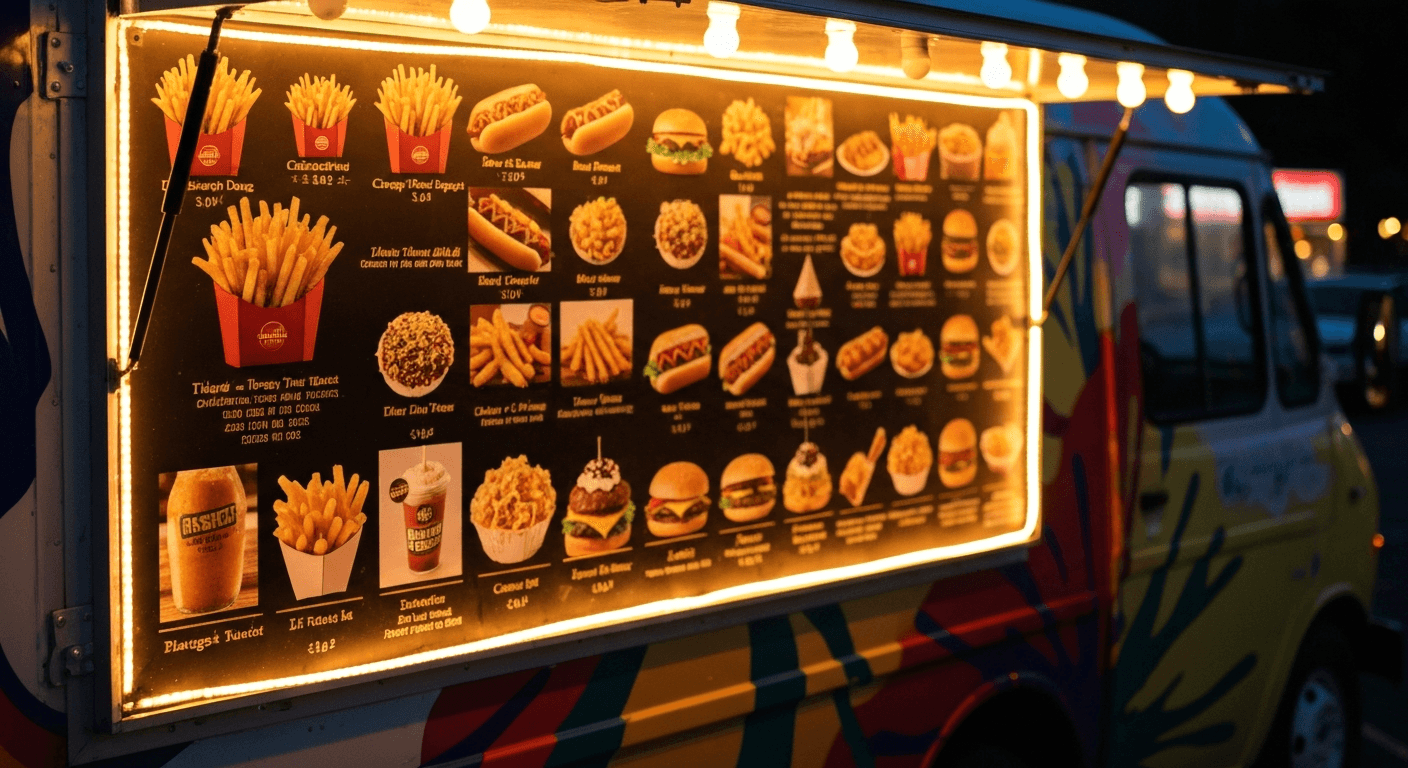
The customer's eye naturally lands in the top left of a menu (reading pattern). Place your most profitable dish there.
Avoid aligned price columns: the eye will compare and always choose the cheapest. Instead, embed prices within the dish description.
Price anchoring
Place your premium dish first on the menu. Even if few customers order it, it anchors the perception of value and makes the other dishes seem "reasonable" by comparison.
Example: if your menu opens with a "Black Angus XXL Burger" at £16, your classic burger at £10 feels like a good deal. Without the premium burger, that same £10 dish can feel expensive.
Name your dishes to tell a story
A dish with a descriptive, evocative name sells better than a generic one.
Examples:
- "Burger" vs "The Melted Comté" -- one sells a product, the other sells an experience
- "Fries" vs "Homemade Fries with Guérande Sea Salt" -- one justifies a +£0.50 premium, the other does not
Step 5: Combos to Boost the Average Ticket
Combo offers are your most effective weapon for increasing the average ticket without any sales effort. The principle is simple: bundle several products at a price slightly below the sum of the parts.
Example:
- Burger alone: £10
- Drink alone: £2.50
- Dessert alone: £3
- Separate total: £15.50
- "Lunch Deal" combo: £13.50
In a food truck, a good combo strategy can increase your average ticket by 15 to 25% on lunchtime services. On 70 covers at +£3, that is £210 in extra revenue per service.
Step 6: Adapt Your Menu to Each Location
A single menu for all your locations is a common mistake. Expectations vary by context:
- Business district (lunch): speed, complete meal deal, £10 to £14. Customers have 30 minutes.
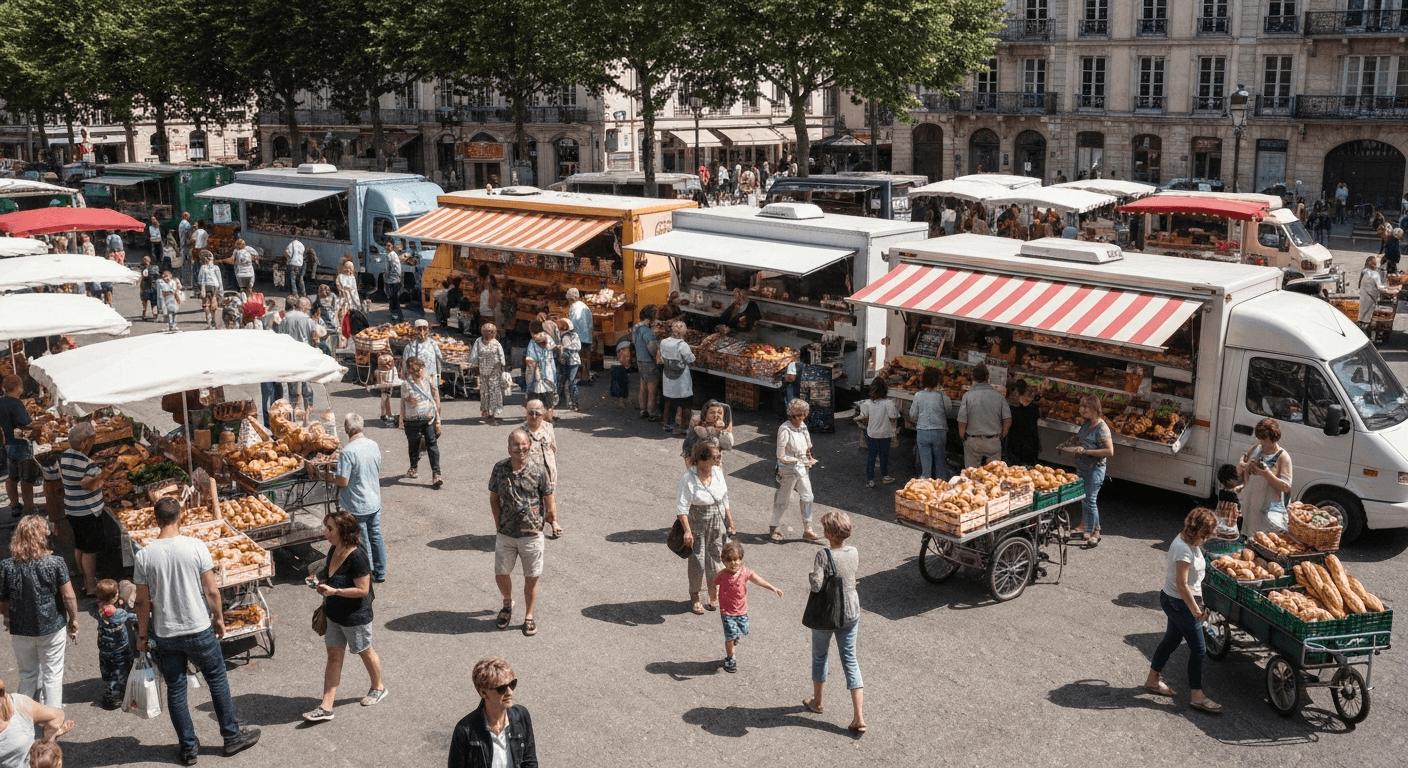
- Weekend market: locally sourced products, generous portions, "treat yourself" atmosphere. Budgets are more flexible.
- Festival or event: one or two signature dishes only, ultra-fast service. Profitability comes from volume.
- Evening or concert: short menu, easy-to-eat-standing items, drinks prominent.
When and How to Evolve Your Menu
Your menu is not set in stone. Revise it:
- Every quarter: to incorporate seasonal products and remove slow sellers
- After each monthly analysis: if a dish has represented less than 5% of sales for 6 weeks, remove it
- Before entering a new area: if you are prospecting a new location, study the local customer profile before finalising your menu
What a Good Menu Changes Concretely
A well-built menu tracked with data means:
- Less food waste (inventory focused on fewer references)
- Faster service (fewer different preparations)
- A higher average ticket (combos and psychological positioning)
- Better cost control (margin tracking per dish)
- More satisfied customers (clearer choice, better-executed dishes)
Frequently Asked Questions
- How many dishes should a profitable food truck menu have?
- A profitable food truck menu ideally has 5 to 8 main dishes. Beyond that, you complicate inventory management, slow down service, and dilute quality. The best-performing food trucks focus on one or two signature dishes and expand on them intelligently.
- What percentage of the selling price should ingredient cost represent in a food truck?
- In a food truck, ingredient cost (ingredients plus packaging) should represent between 28 and 35% of the selling price excl. tax to maintain decent profitability. Above 38%, your margins become insufficient to cover fixed costs. Below 25%, the value-for-money ratio may hurt your image.
- How can I increase the average ticket through the menu?
- The two most effective levers are combo offers (bundling main + drink + dessert at a price slightly below the total) and visual placement (putting your most profitable dishes at the top left of your board). A premium dish listed first on the menu also anchors value perception and makes the other dishes more attractive.
- Should I adapt my menu depending on the food truck location?
- Yes, it is strongly recommended. A business district location at lunchtime calls for a short, fast menu and affordable complete meal deals. A weekend market allows more elaborate dishes and higher prices. A festival requires just one or two signature dishes to maintain pace. Even partially adapting your menu to the context can increase sales by 10 to 20%.
- How do I know which dishes to remove from my menu?
- Classify your dishes by popularity (sales volume) and gross margin. Any dish that has represented less than 5% of your sales for more than 6 weeks AND has a low margin is a candidate for removal. With FoodTracks, this analysis is automated using your SumUp sales data and your supply costs.