Why Choosing the Right Equipment Determines Your Food Truck's Success
Equipment is one of the most strategic line items in a food truck's launch budget. Too little and you risk mid-service breakdowns and regulatory non-compliance. Too much and you tie up capital that will be needed for working capital in the first months.
Equipment accounts for an average of 30 to 50% of the launch budget, excluding the vehicle and bodywork fit-out. Planning a precise list, distinguishing essential from comfort items, and making the right calls between new and second-hand: these are the three decisions that will set your break-even point from day one.
This guide gives you the complete list, selection criteria and classic buying mistakes to avoid.
The Complete List of Essential Food Truck Equipment
1. The Cooking Station: The Heart of Your Food Truck
Depending on your concept, your cooking station will look different — but it is always central:
- Professional griddle (burgers, wraps, galettes): opt for a stainless steel surface of at least 60 x 40 cm, minimum power 3.5 kW. Budget: €500–€2,000 new.
- Professional fryer (chips, fritters, tempura): 8 to 12-litre tank, integrated oil filter to extend oil life. Budget: €600–€2,500.
- Pizza or convection oven: essential for pizza trucks, toasted bagels or warm burgers. Budget: €1,200–€4,000.
- Wok or professional sauté pan: for Asian concepts or quick stir-fries. Budget: €800–€3,000.
- Professional crêpe maker (minimum 40 cm diameter): for sweet or Breton food trucks. Budget: €400–€1,500.
2. The Cold Chain: Regulatory and Vital
Refrigeration is both a legal obligation and a cornerstone of your stock management:
- Built-in professional refrigerator: maintained below 4°C, glass or solid door, 200–400 litre capacity depending on activity volume. Budget: €800–€2,500.
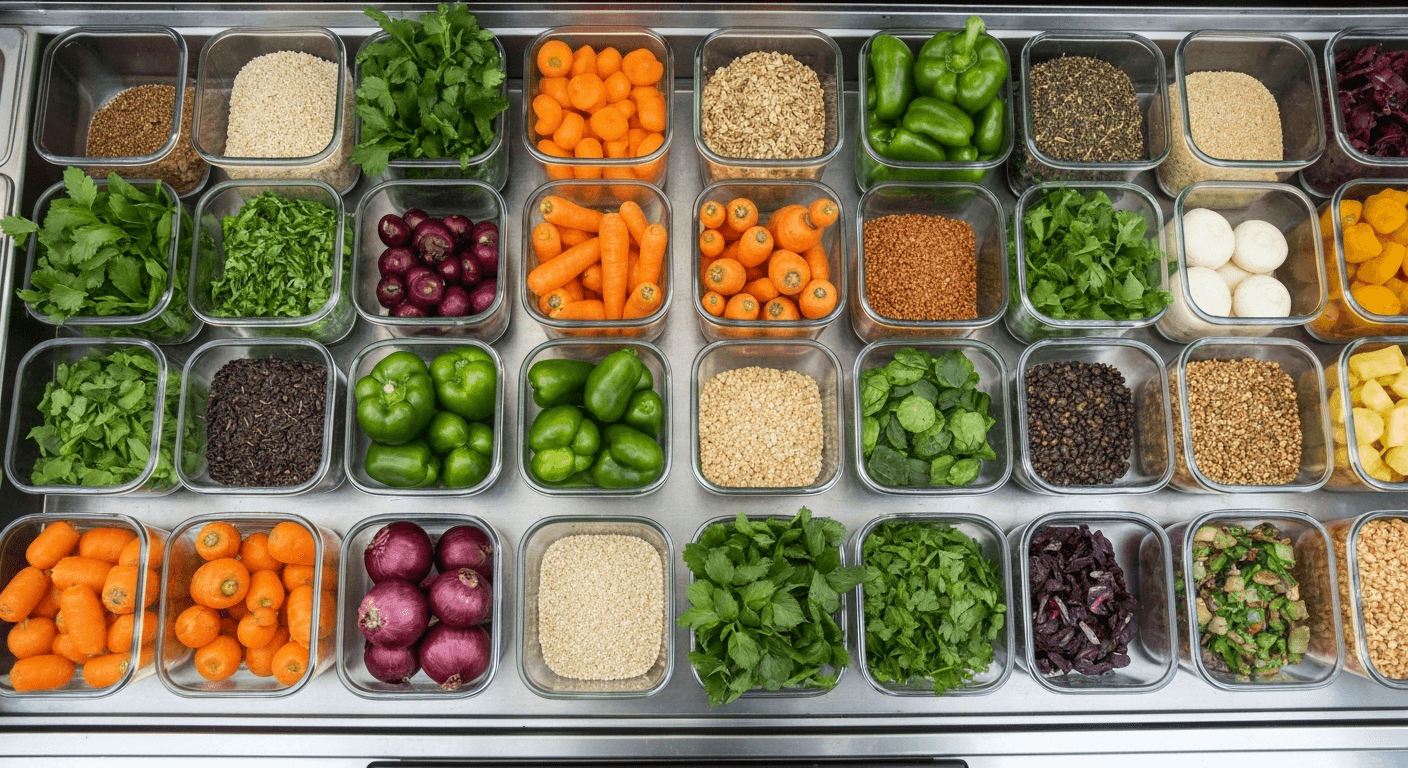
- Refrigerated gastronorm wells (cold bain-marie): for garnishes, sauces and cheeses displayed at the counter. Budget: €400–€1,200.
- Chest freezer (if you work with frozen products): 100–150 litre capacity. Budget: €300–€800.
3. The Hood and Ventilation: Mandatory and Often Underestimated
A hood compliant with the NF EN 16282 standard is mandatory as soon as you have a cooking station with open flame or intense heat. It protects your team and prevents grease build-up (fire risk).
- Professional extraction hood with grease filter: sized to cover the entire cooking station plus 20 cm overhang on each side. Budget: €600–€2,000 depending on length.
- Air extractor with external discharge: the discharge must exit the truck and be directed upwards (not towards customers). Budget: €300–€800.
4. The Service Counter and Display Case
The counter is the interface between your kitchen and your customers. It must be:
- Made of food-grade stainless steel (mandatory in food-handling areas)
- Fitted with a sink with hot and cold water (mandatory for handwashing)
- With a heated or refrigerated display case depending on your concept (Budget: €400–€1,500)
5. Fire Safety Equipment
Mandatory and non-negotiable:
- Class F extinguisher (cooking/oil fires), minimum 6 litres, checked annually
- Fire blanket within arm's reach of the cooking station
- Carbon monoxide detector if a thermal generator or gas burner is used in a semi-enclosed space
6. The Payment Terminal and POS Software
In 2026, over 60% of food truck transactions are contactless. A mobile payment terminal is essential:
- SumUp Air or SumUp Solo: the most widely used in food trucks, 4G-compatible, 8-hour battery life. Budget: €50–€150 (hardware) + per-transaction commission (1.69%).
- Square Reader: competitive alternative, native e-commerce integration if you also sell online.
7. Dry Storage Equipment
Less glamorous but just as important:
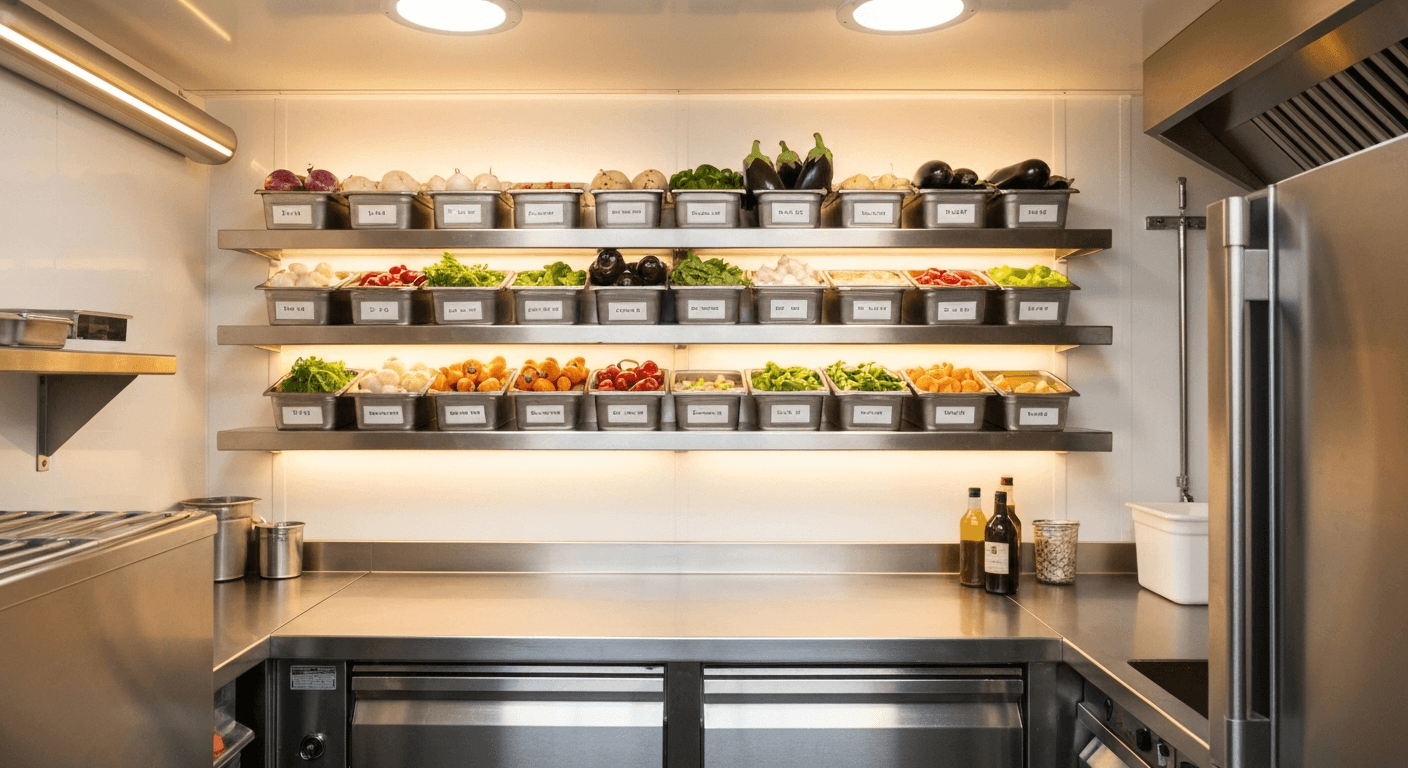
- Stainless steel or food-grade plastic shelving for dry goods (spices, canned goods, packaging)
- Labelled HACCP-compliant airtight containers for opened products
- Cling film dispenser and glove dispenser within immediate reach
New or Second-Hand: How to Decide?
What to Buy New
- Anything related to safety (extinguisher, CO detector, gas cut-off system)
- Equipment in direct contact with food if reconditioning is not certified
- The payment terminal (older models can be incompatible with bank network updates)
What You Can Buy Second-Hand
- Professional refrigerators and freezers (check the compressor and door seals)
- Griddle, fryer, oven — provided a certified technician has signed off on them
- Shelving, gastronorm trays, stainless steel utensils
The 5 Most Common Buying Mistakes
1. Buying Equipment Before Finalising Your Concept
Equipment follows from the menu, not the other way round. First define your 5 to 8 launch dishes, then list the equipment you need. Changing concept after purchase can be expensive.2. Underestimating Electrical Power Requirements
An underpowered generator that trips mid-service is a nightmare. Calculate the total power of all your electrical equipment running simultaneously and add a 20% margin. As a rule of thumb, budget a 6 to 10 kVA generator for a standard food truck.3. Forgetting Small Equipment in the Budget
Professional knives, HACCP cutting boards (different colours per food type), sink trays, probe thermometer, gloves, ties... These purchases add up to €1,500–€3,000 easily and are rarely budgeted.4. Neglecting Preventive Maintenance
A food truck in heavy use puts its equipment under far more strain than a restaurant kitchen. Plan a maintenance budget from the start: 3 to 5% of equipment value per year, i.e. €600–€2,000 depending on your kit.5. Not Stocking Critical Spare Parts
A fryer belt, a refrigerator door seal, an oven element: having these in stock avoids 48 hours of downtime if the supplier is out of stock. Identify the 3 or 4 critical spare parts for each piece of equipment at the time of purchase.Optimising Your Equipment Management with FoodTracks
Equipping your food truck well is good. Monitoring how that equipment is used day to day is even better.
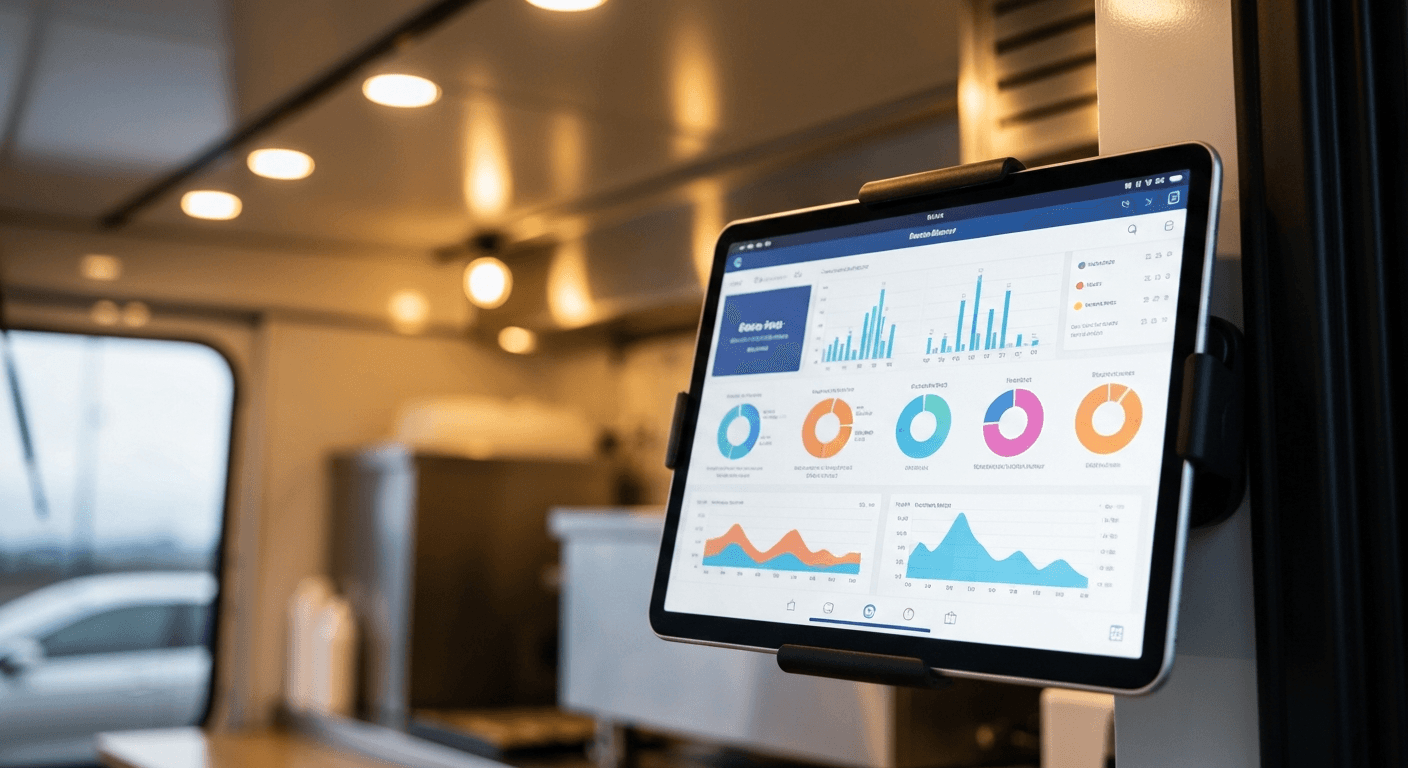
FoodTracks helps you cross-reference sales data (via SumUp integration) with your stock to calculate your real food cost per service. By knowing exactly what each service consumes, you can:
- Adjust supplier orders to avoid over-stocking (which overloads refrigerators and generates waste)
- Identify your least profitable dishes and decide whether to adapt or remove them
- Anticipate cleaning needs (high activity = more filter use = more frequent maintenance)
Frequently Asked Questions
- What is the average budget to equip a food truck from scratch?
- Excluding the vehicle and bodywork fit-out, the equipment budget for a food truck ranges from €15,000 to €40,000 depending on the concept. A burger/fries truck needs a fryer, griddle, sauce wells, refrigerator and heated display — budget €18,000–€25,000 new, or €10,000–€15,000 for quality refurbished. An Asian food truck with a professional wok can reach €30,000. The key is distinguishing launch essentials (what you need from day one) from desirables (what you will add with early profits).
- Can you buy second-hand kitchen equipment for a food truck?
- Yes, and it is actually recommended to control your launch budget. But be selective: favour certified professional second-hand equipment (reviewed by an approved technician), available from specialist resellers like Remy Équipements, Elvea or professional platforms (Annonces Pro, Label Cuisine). Always check the safety system (thermostat, gas cut-off), the existence of a compliance certificate and spare parts availability. Avoid refurbished domestic equipment: it is not designed for intensive service use.
- What equipment is mandatory to legally open a food truck?
- Legally, a food truck must have: a water point with hot water and soap (food hygiene), an approved refrigeration system keeping food below 4°C, a fire extinguisher suitable for kitchen fires (Class F) that is accessible and annually checked, a hood with a grease filter compliant with NF EN 16282, and a temperature traceability system. Depending on the concept, forced ventilation and a carbon monoxide detector may be required. The DDPP (local food safety authority) can inspect at any time — ensure compliance from day one.
- Do I need a specific payment terminal for a food truck?
- Not necessarily 'specific', but adapted to your field constraints: sufficient battery life (8 hours minimum), resistance to shock and temperature changes, 4G connectivity (you won't always have Wi-Fi), and short transaction time (under 5 seconds) to avoid blocking the queue. SumUp Air, SumUp Solo and Square Reader are among the most widely used in food trucks. If you use FoodTracks, the native SumUp integration lets you automatically sync sales and stock — a considerable time saving at the end of a service.
- How do I maintain food truck equipment to avoid breakdowns?
- Preventive maintenance is your best insurance against mid-service breakdowns. Set up a weekly schedule (hood filter cleaning, fryer level check, refrigerator thermostat test) and a monthly one (grill disassembly, seal inspection, condenser purge). Have your generator and gas installation serviced annually by an approved technician — this is often required by your insurance. Log anomalies as soon as they appear: a minor problem ignored becomes a major breakdown within two weeks.